Dental Implants Calabasas CA and Advanced Treatment Planning
Replacing a missing tooth used to be a fairly straightforward conversation. A bridge, a removable partial, or in some cases, nothing at all. Dental implants changed that discussion. They gave both dentists and patients a way to rebuild not just the visible crown, but the root support underneath it. That matters more than most people realize. A missing root affects bone, gum shape, bite force, speech, cleaning habits, and often a person’s willingness to smile without thinking about it.
When people search for Dental Implants Calabasas CA, they are often looking for more than a single procedure. They want a stable result that looks natural, functions well, and holds up over time. What many do not see at first is that the quality of the outcome depends heavily on treatment planning long before the implant is placed. The implant itself is only one part of a larger sequence. The real craft lies in diagnosis, timing, imaging, prosthetic design, and understanding the small risk factors that can turn a good case into a frustrating one.
In a community like Calabasas, where patients tend to be health conscious and appearance aware, expectations are usually high. People want teeth that feel like their own. They want gums that frame the smile correctly. They do not want bulky contours, dark triangles, or crowns that look slightly too long. They also want to avoid surprises, especially after committing the time and cost involved. That is exactly where advanced treatment planning earns its place.
The implant is not the treatment plan
One of the most common misunderstandings in implant dentistry is the idea that an implant is a product. It is not. It is a treatment pathway. A titanium or ceramic fixture may be the hardware, but the decision-making around that hardware determines whether the final restoration blends in or stands out for the wrong reasons.
A well-planned implant case starts with a simple question: what should the finished tooth look like and how should it function? That answer guides everything else. The position of the final crown determines the ideal angle and depth of the implant. The implant does not get placed wherever bone happens to be convenient if that location forces a compromised crown later. Experienced clinicians plan from the restoration backward, not from the screw forward.
This is one reason advanced planning often involves both surgical and restorative thinking at the same time. A surgeon may place the implant, but the final crown, bridge, or denture has to live in the patient’s mouth every day. If the implant is too far facial, the crown may look bulky and the gum may recede. If it is too deep, the restoration may become hard to clean or cement may trap below the gumline. If it is angled poorly, the screw access may emerge through an unattractive area. These are not theoretical problems. They show up in real practices every week, usually after an earlier shortcut.
Why the Calabasas patient population often benefits from a more detailed workup
Patients in Calabasas are not all the same, but there are some patterns that tend to matter clinically. Many adults have had years of cosmetic dentistry, orthodontics, bite guards, whitening, veneers, or prior restorative work. Some have a very high smile line, which means even a small gum asymmetry becomes visible. Others have strong chewing muscles and parafunctional habits such as clenching, which can place significant force on implants and ceramic restorations.
These details affect planning. A patient with a low smile line and thick gum tissue may tolerate small imperfections that would be obvious in someone with a broad smile and thin tissue. A patient who grinds at night may still be a good implant candidate, but the prosthetic design, material selection, and protective night guard become more important. Someone who lost a tooth years ago may have a narrowed ridge and need grafting before an implant can be placed in a favorable position.
This is why the best consultations often feel slower than patients expect. They are not slow because the office is uncertain. They are slow because a careful team is measuring variables that matter.
Imaging changed implant dentistry for the better
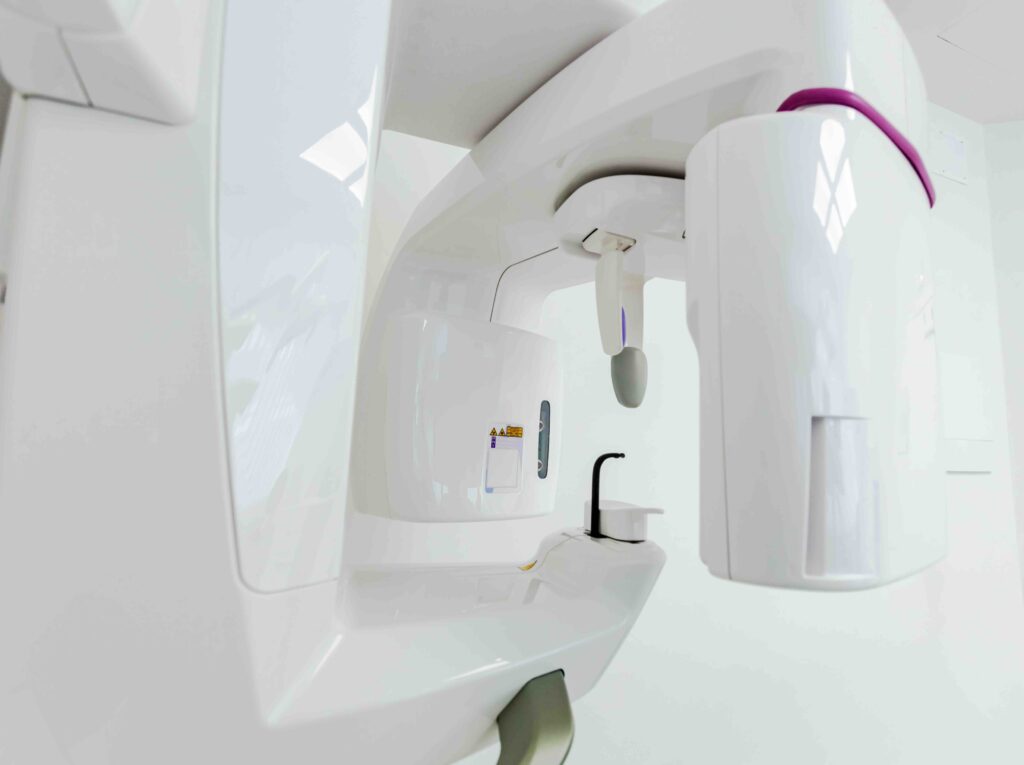
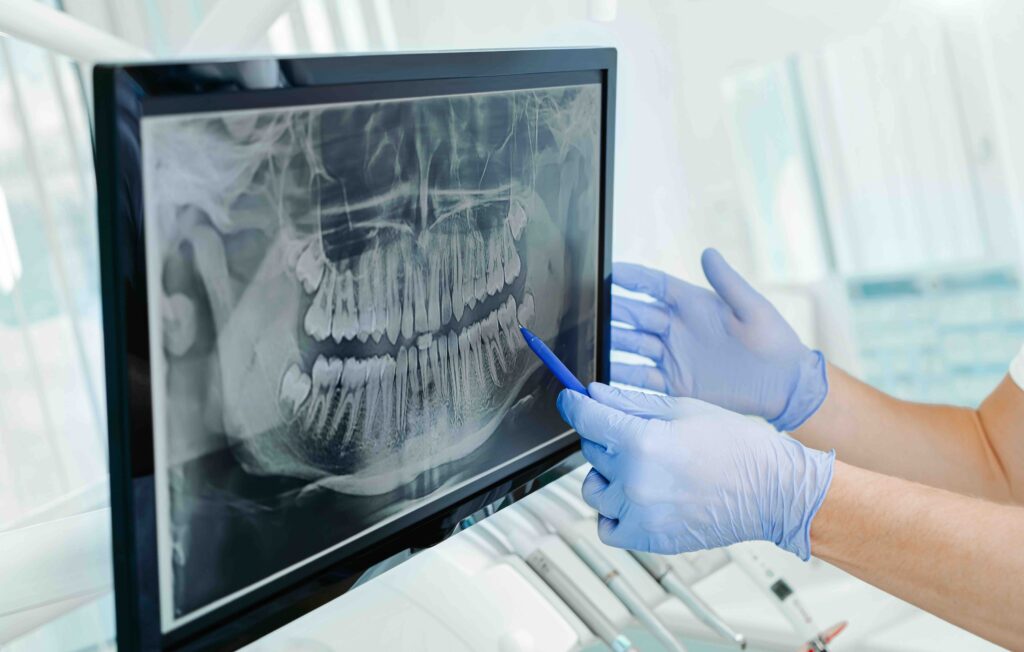
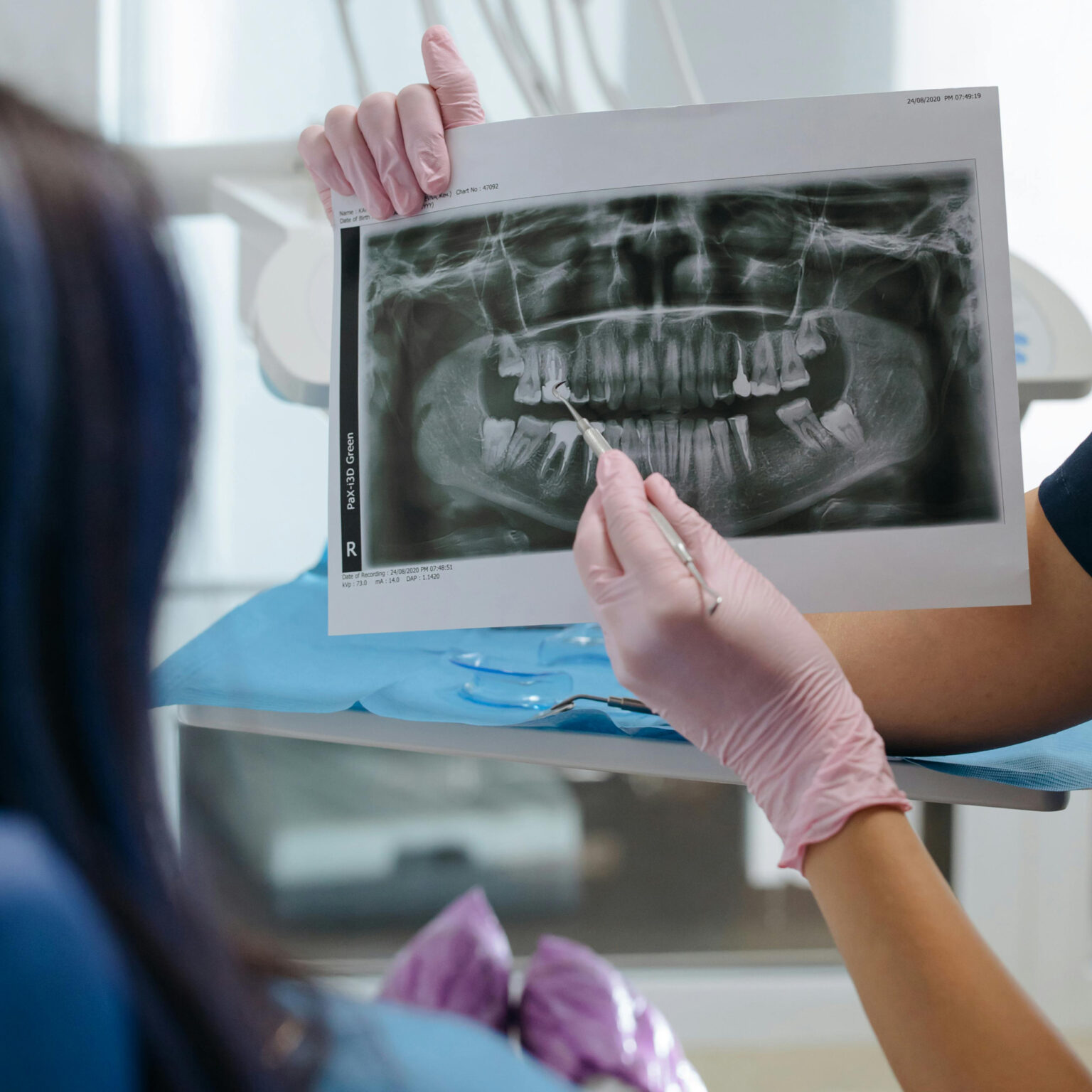
Traditional two-dimensional X-rays remain useful, but advanced implant planning relies heavily on cone beam computed tomography, often called CBCT. This three-dimensional scan allows the clinician to evaluate bone height, width, angulation, nerve location, sinus anatomy, and adjacent root positions with far greater accuracy than a flat image.
That precision affects safety and esthetics. In the lower jaw, the inferior alveolar nerve must be protected. In the upper posterior region, the maxillary sinus often limits available bone. In the front of the mouth, even a millimeter or two can make the difference between a natural emergence profile and a disappointing result.
CBCT does not replace clinical judgment, but it sharpens it. It can reveal that a site that looks acceptable on a regular film is actually too thin for ideal placement. It can also spare a patient from unnecessary grafting if the bone is better than expected. Good planning is not about adding complexity for its own sake. It is about reducing avoidable guesswork.
Digital planning and surgical guides
Digital workflow has improved implant treatment in a practical, measurable way. With proper scans and software, the clinician can virtually position the implant according to the intended restoration. In selected cases, that plan can be transferred to the mouth using a surgical guide.
A guide is not magic, and it does not make an inexperienced clinician experienced. What it can do is increase precision, particularly when space is tight, adjacent teeth are close, or esthetic demands are high. It is most valuable when paired with sound judgment rather than used as a substitute for it.
Patients sometimes assume guided surgery means every case is easier. Not always. Some mouths simply do not offer the kind of access that makes a guide practical. Limited opening, dense tissue, difficult posterior anatomy, or the need to revise bone contours at the time of surgery may lead a doctor to place an implant freehand after thorough planning. That can still be excellent care. The key issue is not whether a guide is used, but whether the implant ends up in the right three-dimensional position for a durable, cleanable, esthetic restoration.
Bone quality, bone volume, and the myth of the one-visit fix
Advertising often promotes implants as a quick replacement. For the right patient, same-day treatment can be appropriate. A tooth is removed, an implant is placed immediately, and a temporary tooth may be attached. This can be efficient and very satisfying when conditions line up. However, it is not the universal standard, and pushing every case into that model is a mistake.
Bone quality varies. Fresh extraction sockets vary. Infection, thin facial bone, gum recession risk, and bite pressure all matter. Immediate placement is technique-sensitive and should be selected, not assumed. In some cases, the better decision is to graft the socket, let it heal, and place the implant later into a more stable foundation.
There is also a difference between placing an implant immediately and loading it immediately. Some implants can receive a temporary restoration right away, but that temporary may need to be out of heavy biting contact while integration occurs. Patients hear “same day” and understandably think “done.” In reality, many of these cases still unfold over several months.
A responsible clinician explains that timeline clearly. Osseointegration, the process of bone attaching to the implant surface, usually takes time. Depending on anatomy and stability, that may be a few months or longer. Rushing the restorative phase before biology is ready can raise failure risk.
When grafting improves the final result
Bone grafting has an undeserved reputation for being an alarming add-on. In many cases, it is simply a way to rebuild what was lost and give the implant a fair chance to succeed in the right position. After a tooth has been missing for some time, the ridge often shrinks in both width and height. Trauma, infection, and periodontal disease can make the defect more severe.
Grafting may be minor, such as preserving a socket after extraction with particulate graft and a membrane. It may be more involved, such as ridge augmentation or a sinus lift in the upper back jaw. The purpose is not to make treatment more elaborate. The purpose is to support a restoration that looks proportional and is stable under function.
A common real-world example is the upper front tooth lost to fracture. If the facial bone is thin or damaged, placing an implant without addressing the defect can lead to gray show-through, gum collapse, or a crown that appears too long compared with the neighboring tooth. A graft, even though it extends treatment time, often gives the better esthetic result. Patients usually understand the value once they see before-and-after examples of what happens when the supporting architecture is ignored.
Soft tissue is just as important as bone
Patients naturally focus on the tooth. Dentists know that the gum often determines whether an implant disappears into the smile or advertises itself. Thick, healthy soft tissue helps mask the implant and frame the crown. Thin tissue can recede more easily and may reveal metal shadowing, especially in the esthetic zone.
This is why advanced planning includes a soft tissue assessment. The clinician considers tissue thickness, keratinized tissue width, papilla height between teeth, and the patient’s smile line. Sometimes a connective tissue graft or contouring procedure improves the long-term appearance and maintainability of the implant site.
This part of treatment is easy to underestimate because it is subtle when done well. Patients do not usually notice ideal tissue architecture. They notice when it is off. A black triangle next to an implant crown, an uneven gum margin, or a visibly longer tooth can become the thing their eye goes to every time they look in a mirror.
Restorative choices shape the patient experience
Not every implant restoration is the same. Some implants support single crowns. Others anchor bridges. Some retain full-arch prostheses for patients missing most or all of their teeth. The planning principles overlap, but the details differ.
For a single missing tooth, matching the shape, translucency, and contact points of the neighboring teeth is critical. For multiple teeth, implant spacing and angulation become more complex. In full-arch cases, the bite relationship, lip support, speech patterns, and smile design take on even greater importance.
Material choice also matters. Zirconia and porcelain-fused restorations each have strengths and limitations depending on the case. Screw-retained restorations are often favored because they can be removed for maintenance and avoid subgingival cement issues. Cement-retained crowns can still have a place, but they require meticulous execution. Small technical decisions like these often separate a merely acceptable implant from one that remains trouble-free for years.
A practical look at what advanced planning usually evaluates
The average patient does not need to memorize every diagnostic detail, but it helps to understand what a thorough implant team is reviewing behind the scenes.
- Bone volume, density, and anatomic limitations such as nerves or sinuses.
- Gum thickness, smile line, and the esthetic demands of the area.
- Bite forces, clenching habits, and how the opposing teeth contact the restoration.
- Medical factors such as diabetes control, smoking, medications, and healing history.
- The design of the final restoration, including how it will be cleaned and maintained.
Those five categories cover a surprising amount of ground. A case can look easy from the front and still have a hidden bite problem. A site can appear to have enough bone but not enough tissue. A healthy patient can still present with habits that overload ceramics or loosen components over time.
Medical history still matters, even with excellent technology
Implants have high success rates in appropriately selected patients, but they are not indifferent to systemic health. Uncontrolled diabetes can slow healing and increase infection risk. Smoking affects blood flow and is associated with higher complication rates, particularly in grafting and esthetic cases. Some medications and prior therapies, such as certain antiresorptive drugs or head and neck radiation, require careful coordination and risk assessment.
That does not automatically rule out treatment. It means the plan must fit the person, not just the X-ray. Sometimes timing changes. Sometimes a physician is consulted. Sometimes a patient is advised to improve oral hygiene or reduce smoking before surgery. These are not obstacles placed in Dental Implants Calabasas CA the way of care. They are part of responsible care.
The same applies to periodontal health. An implant should not be placed into a mouth with active, uncontrolled gum disease and neglected maintenance. The bacteria do not respect the difference between natural teeth and implants. Peri-implant inflammation is real, and once significant bone loss develops around an implant, treatment can become difficult and unpredictable.
What the best consultations tend to sound like
A strong implant consultation usually includes straightforward conversation rather than sales language. The doctor explains what is present now, what the finished result can reasonably look like, what procedures may be needed, and where the uncertainties lie. If a front tooth has a guarded esthetic prognosis because of tissue loss, that should be said plainly. If the back tooth is functionally simple and likely very predictable, that should be said too.
Patients often appreciate hearing the trade-offs in normal language. For example, immediate implant placement may shorten the timeline but carry more esthetic risk in a thin-gum front-tooth case. Delayed placement may feel slower, but it can produce better tissue management. A removable temporary may be less convenient than a fixed provisional, yet safer for healing in some circumstances.
That kind of honesty builds trust because it sounds like real clinical judgment, not a script.
Recovery, maintenance, and the reality after placement
Even perfectly placed implants require care. The surgery itself is often easier than patients expect, especially for a single implant. Mild swelling, pressure, and a few days of tenderness are common. More extensive grafting or full-arch procedures can involve a more noticeable recovery. Most people function well with the right post-operative instructions and medication plan, but comfort varies with the complexity of the case.
Long-term maintenance matters just as much as the surgery. Implant restorations need professional monitoring and good daily cleaning. Floss threaders, interdental brushes, water flossers, or other tools may be recommended depending on the design. Patients with a history of clenching often need a night guard to protect both implants and natural teeth.
This is where advanced planning pays off again. A restoration that is difficult to clean because the contours are too bulky or the spacing is poor can become a chronic source of inflammation. A restoration designed with hygiene in mind is easier for the patient to maintain year after year.
Questions worth asking before moving forward
Patients comparing options for Dental Implants Calabasas CA often focus on timing and price first. Those are understandable concerns, but they should not be the only ones. The better questions usually reveal more about the likely quality of care.
- Am I a candidate for immediate placement, or would a staged approach give a better result?
- Will you use a CBCT scan and digital planning for my case?
- Is bone grafting or soft tissue grafting likely, and why?
- How will the final crown or bridge be designed for cleaning and maintenance?
- What risks in my specific case could affect esthetics, healing, or long-term stability?
These questions do not require the patient to become a dental expert. They simply open the door to a more useful conversation.
Cost, value, and why cheaper treatment can become expensive
Implant dentistry is not inexpensive, and patients deserve transparency about fees. What complicates the discussion is that two treatment plans with different prices may not be equivalent. One may include a CBCT, guided planning, grafting materials, custom abutments, provisional restorations, specialist coordination, and follow-up care. Another may quote a lower number while excluding several of those elements.
Lower cost is not automatically poor quality, and higher cost is not proof of excellence. Still, advanced planning, proper imaging, quality components, and careful restorative work do carry real overhead. When corners are cut, the consequences often appear later as tissue recession, loosened parts, trapped cement, fractured ceramics, or a crown that never quite looked right.
Repairing implant complications can cost more than getting the fundamentals right the first time. In the esthetic zone, the emotional cost can be even higher because revisions are time-consuming and patients live with the appearance every day.
The full-arch conversation deserves special care
For patients missing many teeth, implant-supported full-arch treatment can be life changing. It can improve chewing, confidence, speech, and quality of life in ways that traditional dentures often cannot. It also requires a very high level of planning. The number and position of implants, available bone, smile line, lip support, vertical dimension, and prosthetic material all influence the result.
Some patients are good candidates for a fixed Dental Implants Calabasas CA full-arch solution with immediate provisional teeth. Others are better served by a removable implant-retained overdenture, especially if cleaning ability, budget, or anatomy makes a fixed option less practical. There is no one-size-fits-all answer here. The best plan is the one that suits the patient’s anatomy, goals, dexterity, and long-term maintenance ability.
What patients should ultimately look for
The strongest implant cases usually share the same underlying pattern. The diagnosis was careful. The treatment sequence matched the biology. The surgeon and restorative dentist were aligned, whether that was one clinician or a coordinated team. The patient understood the timeline and maintenance requirements. No one pretended that speed mattered more than precision.
That is the real value of advanced treatment planning. It respects the fact that implant dentistry is both medical and architectural. Bone has to heal. Gums have to frame the restoration. The crown has to fit the bite, the face, and the patient’s daily habits. When those pieces come together, dental implants can feel remarkably close to having the tooth back.
For anyone exploring Dental Implants Calabasas CA, it is worth looking beyond the implant itself and paying attention to how the plan is built. A thoughtful plan tends to produce calmer surgery, fewer surprises, cleaner esthetics, and a result that serves the patient long after the appointments are over.
Oaks Dental
5000 Parkway Calabasas, Suite 308
Calabasas, CA 91302, United States
Phone: +1 (818) 412-8349
FAQ About Dental Implants Calabasas CA
How much does a dental implant cost in California?
Costs vary with the number of teeth replaced, restoration type, imaging, and any extractions or bone grafting. Request an itemized estimate after an examination; a single advertised price may not include every treatment stage.
Can people with autoimmune disease get dental implants?
Some people may qualify, but the condition, medications, oral health, and healing risks require individual assessment. Share your medical history with your dentist, who may coordinate with your treating physician.
Can you have dental implants if you have osteopenia?
Osteopenia does not by itself establish whether implants are suitable. Your dentist must evaluate jawbone support and review bone-related medications and other risks before recommending treatment.