Dental Implants vs Veneers: Understanding the Difference
People often mention dental implants and veneers in the same breath, as if they are competing versions of the same treatment. In practice, they solve very different problems. One replaces a missing tooth from the root up. The other changes the front surface of a tooth that is still present. That distinction sounds simple, but it is the point where many treatment conversations either become clear or go off course.
I have seen patients arrive convinced they need veneers because they dislike the appearance of a front tooth, only to learn that the tooth is structurally unsalvageable and actually needs to be replaced. I have also seen the opposite, where someone asks about implants because they want a straighter, brighter smile, even though every tooth is healthy and intact. When that happens, the first job is not to sell a procedure. It is to slow the discussion down and define the real issue.
If you understand what each treatment is designed to do, the decision becomes much easier. The right choice depends less on trends or before and after photos and more on what is happening in the tooth, the gum, the bone, and the bite.
These treatments are not substitutes
A veneer is a thin shell, usually porcelain and sometimes composite, bonded to the front of an existing tooth. Its purpose is cosmetic and restorative at the surface level. It can improve color, shape, size, minor chips, worn edges, and in some cases the appearance of mild misalignment or spacing. A veneer does not replace a tooth. It depends entirely on the health and strength of the tooth underneath it.
A dental implant is a replacement for a missing tooth. The implant itself is a titanium or ceramic post placed into the jawbone, where it acts like an artificial root. After healing, it supports a crown that looks and functions like a tooth. So when people compare veneers and Dental Implants, they are often comparing a treatment for improving visible enamel with a treatment for replacing something that is gone.
That difference changes everything, including cost, treatment time, maintenance, and the type of planning required.
What veneers are best at
Veneers work best when the underlying tooth is present, reasonably healthy, and stable. Think of a tooth that is discolored from trauma, slightly Dental Implants misshapen, chipped at the edge, or worn in a way that affects the smile. In those cases, a veneer can be conservative and elegant. Done well, it preserves much of the natural tooth while changing what people see when you smile.
Porcelain veneers are known for lifelike translucency and stain resistance. They tend to hold their polish and color better than composite. Composite veneers can still be a good option, especially when a patient wants a lower upfront cost, a same day solution, or a more repairable material. The trade-off is usually longevity and stain resistance. Composite can look excellent on day one, but over time it is more likely to pick up discoloration and edge wear.
Veneers are especially useful in the smile zone because they allow the dentist and lab to control tiny details that matter more than most people realize. The length of the incisal edge, the way light passes through the edge of a front tooth, the texture that keeps teeth from looking flat and fake, all of that can be designed with precision. That is why veneers are often part of smile makeovers.
Still, veneers have limits. If a tooth has a large filling, a crack that extends deep into the structure, severe decay, advanced gum disease, or too little remaining enamel, a veneer may not be the right answer. It can make a compromised tooth look better for a while, but appearance does not fix structural weakness.
What Dental Implants are designed to solve
Dental Implants are for teeth that are missing or need to be removed because they cannot be predictably saved. That could happen after trauma, deep decay, root fracture, failed root canal treatment, severe periodontal bone loss, or congenital absence. The implant replaces the root. The crown on top replaces the visible part of the tooth.
This is not just about filling a gap in a smile. A missing tooth affects the surrounding bone, adjacent teeth, and bite. Bone in the jaw is maintained partly by stimulation. When a tooth is lost, that stimulation decreases, and the bone in the area begins to shrink over time. That is one of the reasons implants are often preferred over doing nothing. They help preserve function and, in many cases, support better long-term stability in the mouth.
An implant can also be a cleaner solution than cutting down healthy adjacent teeth for a bridge. If the neighboring teeth are intact and strong, many clinicians and patients prefer to leave them alone rather than prepare them as supports. That judgment changes if the neighboring teeth already have large fillings or crowns, but it remains one of the central advantages of implant therapy.
There is another point people underestimate: replacing a front tooth with an implant is not merely a mechanical job. It is one of the most demanding aesthetic procedures in dentistry. Matching the shape, emergence profile, gum contour, and symmetry of a single central incisor can be extremely challenging. It can be done beautifully, but the planning has to be meticulous.
The simplest way to tell which category you are in
A useful first question is this: are you trying to improve a tooth that still exists, or replace a tooth that is missing?
If the tooth is present and largely sound, veneers may be relevant.
If the tooth is missing, or so badly damaged that it must be removed, veneers are not a substitute. That is when the conversation shifts toward Dental Implants, bridges, or removable options.
That sounds obvious written out, yet many real decisions are messy because the tooth is technically still there but no longer reliable. For example, a front tooth with repeated bonding, internal staining after trauma, a failing root canal, and very thin remaining walls may look like a veneer case at first glance. Once imaging and examination are complete, it may turn out to be a poor candidate for any surface cosmetic treatment. In that case, preserving the tooth at all costs can create more expense and frustration later.
Appearance versus structure
One of the best ways to think about the difference is to separate appearance from structure.
Veneers primarily address appearance, though they can restore minor lost tooth form.
Implants primarily address structure and replacement, though they can also produce excellent aesthetics.
When patients confuse the two, it is often because they are focusing on the visible end result. They want a natural looking tooth in the smile line. That is a reasonable goal. But two treatments can lead to a similar visual outcome while starting from completely different biological situations.
A well made veneer can make a healthy but unattractive tooth look exceptional. A well placed implant crown can make a missing tooth appear convincingly natural. What determines the choice is not which photo looks better online. It is whether there is a tooth worth preserving and whether preserving it is predictable.
How treatment time differs
Veneers usually move faster. After planning, preparation, and impressions or scans, the final restorations are bonded in a relatively short sequence of visits. In some cases, especially with composite, treatment can be completed in one appointment. Porcelain veneers typically take longer because of laboratory fabrication, but the overall timeline is still measured in days or weeks rather than months.
Dental Implants usually require more patience. If the tooth is already missing and the bone is favorable, some cases move efficiently. Even then, the implant needs time to integrate with the bone before the final crown is placed. If extraction, grafting, or soft tissue management is needed, the process can stretch over several months. That is normal. It is not delay for its own sake. It is biology setting the pace.
This matters for patients planning weddings, public speaking engagements, or job transitions. A person who needs a quick cosmetic refresh before an event may be an excellent veneer candidate and a poor implant timeline candidate, unless the implant was placed well in advance. On the other hand, someone who chooses a rushed cosmetic fix on a tooth that is failing structurally may end up facing a more disruptive problem at exactly the wrong time.
Cost is not just the fee quoted on day one
People understandably ask which option costs more. In a straightforward sense, Dental Implants usually have a higher upfront cost than a single veneer. The procedure involves surgery, components, imaging, restorative work, and sometimes grafting. Veneers, especially when several are done together, also represent a significant investment, but the fee structure is different.
The more useful question is not which number is higher on a treatment estimate. It is which option fits the condition of the tooth and what future costs are likely if the first choice fails.
A veneer placed on an ideal tooth can last many years and be a sound investment. A veneer placed on a heavily compromised tooth may become an expensive detour before extraction and replacement. Likewise, an implant done in a poorly planned or poorly maintained environment can create additional costs through tissue problems, esthetic compromises, or component complications.
Durability is part of the value equation, but so is biological appropriateness.
Longevity depends on more than the material
Patients often ask whether veneers or implants last longer. The honest answer is that longevity varies widely because success depends on the whole case, not just the restoration.
A porcelain veneer can serve a patient very well for many years when bonded to healthy enamel, protected from heavy grinding, and cared for consistently. The same veneer may fail much sooner if placed on weak tooth structure or in a patient with significant parafunctional habits and no protective night guard.
Dental Implants can also last many years, and often much longer, but they are not maintenance free. Implants do not get cavities, yet the surrounding tissues can absolutely develop inflammation and bone loss if plaque control is poor or if the restoration design traps debris. I have seen implants fail not because the surgical placement was bad, but because the patient was told, implicitly or explicitly, that an implant is a permanent part that no longer needs close attention. That is a costly misunderstanding.
The best long-term results come from accurate diagnosis, good technique, realistic case selection, and regular maintenance. Material matters, but fundamentals matter more.
The role of bone and gum tissue
This is where the gap between veneers and implants becomes especially clear. Veneers involve the visible enamel and the bonding surface. Implants involve bone, gum architecture, healing, and prosthetic design.
If a front tooth is missing, the question is not merely whether an implant can be placed. The question is whether the site has enough bone and soft tissue to support a natural looking result. A patient who lost a tooth years ago may have significant ridge collapse. That can mean grafting before or during implant placement. Even with excellent care, rebuilding a natural gum contour around a single implant can be one of the hardest tasks in dentistry.
By contrast, if the tooth is present and the gums are healthy, a veneer may preserve the natural emergence profile and tissue support with far less biological disruption. That is one reason dentists try to save teeth when doing so is genuinely predictable. The natural tooth and its supporting tissues are hard to improve upon.
When neither option is the right first step
Some patients arrive asking for veneers when the real need is orthodontic alignment, gum treatment, or management of grinding. Others ask for implants when a tooth can still be saved with periodontal care, endodontic treatment, or a crown.
The best dentistry is often the treatment that clarifies the sequence rather than rushing into the most visible procedure. A patient with active gum disease is not ready for elective veneers or implants until that disease is controlled. A patient with a deep overbite and severe wear may need bite stabilization before cosmetic work, or the cosmetic work will be sacrificed to the same forces that damaged the original teeth.
This is where good consultation matters. Not every problem should be solved at the surface.
Real-world examples that illustrate the difference
Consider a patient in her early thirties with one dark front tooth after childhood trauma. The tooth is intact, the root is healthy, and the gum line is even. She dislikes the color difference in photos. That is often a veneer conversation, sometimes after internal bleaching or other conservative options are discussed. The problem is visible and localized, and the tooth itself may still be structurally dependable.
Now consider a patient in his fifties with the same dark front tooth, but this one has had two root canals, repeated bonding, a vertical crack, and tenderness on biting. The crown length looks fine from the front, but imaging shows bone loss near the root. Although the complaint sounds cosmetic, the issue is no longer cosmetic at its core. A veneer would not fix instability. This is the kind of case where extraction and Dental Implants may become part of the discussion, along with grafting and a provisional plan during healing.
Or take a younger patient with small spaces between the front teeth and otherwise healthy enamel. Veneers might close those spaces beautifully, but mild orthodontic movement could also be the more conservative option. If veneers are chosen, the decision should be based on shape goals, bite, and the amount of tooth preparation required, not just speed.
These examples matter because the same chief complaint, “I hate how this front tooth looks,” can lead to very different recommendations once the diagnosis is complete.
Questions worth asking at a consultation
If you are deciding between these paths, the most important part of the visit is not hearing the name of a procedure. It is understanding why that procedure is being recommended.
A strong consultation usually answers a few specific questions:
- Is the tooth structurally healthy enough to keep long term?
- If a veneer is proposed, how much natural tooth will be removed?
- If an implant is proposed, what is the condition of the bone and gum tissue?
- What maintenance will be required over the next five to ten years?
- Are there more conservative alternatives that should be considered first?
Those questions tend to shift the conversation from marketing language to clinical judgment. That is where patients make better decisions.
The emotional side of the decision
Dental choices are rarely purely technical. A missing front tooth can affect confidence in a way that is hard to overstate. Patients often want the fastest route back to normal, and that urgency is understandable. Cosmetic concerns also carry emotional weight. People may avoid smiling, hold back in professional settings, or feel older than they are because of worn or discolored teeth.
Good treatment planning makes room for that emotion without letting it drive poor decisions. A temporary solution during implant healing can be a huge quality of life improvement. A conservative veneer plan can restore confidence without over-treating a healthy mouth. What matters is matching the treatment to the biology, not just to the frustration of the moment.
Which option is better
Neither is better in the abstract. Veneers are better when the tooth exists, is healthy enough to keep, and the main goal is to improve appearance or minor form. Dental Implants are better when a tooth is missing or cannot be saved predictably. Trying to make one do the job of the other is where problems begin.
Patients sometimes hope for a single ranking, as if implants are the premium choice and veneers are the lighter version, or vice versa. That is not how these treatments work. They are different tools for different conditions. The best result comes from choosing the tool that fits the anatomy, the diagnosis, and the long-term plan.
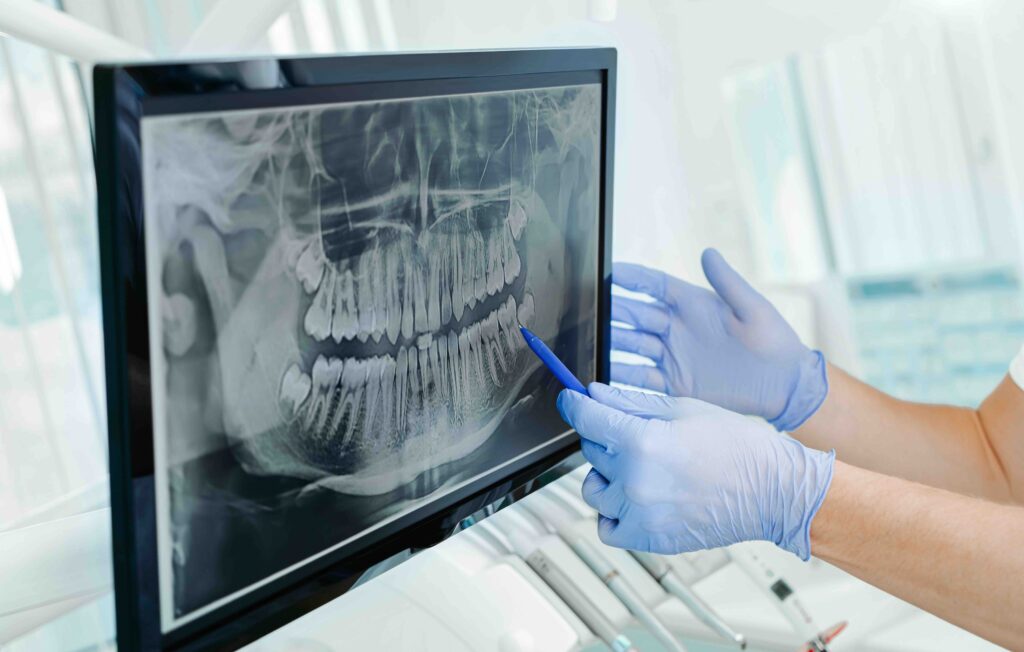
A skilled dentist will usually spend less time defending one category and more time showing you what is happening in your specific mouth. That may involve photos, scans, X-rays, bite analysis, and a frank discussion about what can be preserved. When that conversation is thorough, the decision between veneers and Dental Implants becomes far less confusing. It stops being a cosmetic shopping question and becomes what it should be from the start: a question of preserving health, function, and a natural-looking smile in the most reliable way possible.
Oaks Dental
5000 Parkway Calabasas Suite 308
Calabasas, CA 91302, United States
+1 818-431-2000
FAQ About Dental Implants
What is the downside of a dental implant?
Implants require surgery and a healing period that can last several months. Possible complications include infection, nerve or sinus injury, damage to nearby teeth and failure to bond with bone. Your dentist should assess your health, bone support and alternatives before recommending treatment.
What do dental implants typically cost?
There is no single price for every implant case. The number of teeth replaced, implant components, final restoration and any grafting or extractions affect the total. Request a written estimate covering every stage and confirm insurance benefits and out-of-pocket costs with the practice.
How long do tooth implants last?
An implant can provide long-term support and may last a lifetime with good oral hygiene and regular dental care, but this is not guaranteed. The crown or other restoration may need replacement sooner. Smoking, gum disease and some health conditions can reduce implant success.