Why Dental Implants Are Considered the Gold Standard
Losing a tooth changes more than a smile. It changes how a person chews, how clearly certain words come out, how the jaw feels at the end of the day, and often how willing someone is to laugh without thinking about it. In practice, the best replacement is usually the one that restores function as closely as possible to a natural tooth while protecting the surrounding bone and neighboring teeth. That is why dental implants are so often described as the gold standard.
That phrase gets repeated so often that it can start to sound like marketing. It is not. It comes from a set of practical advantages that become obvious when you compare implants with older solutions such as removable dentures or fixed bridges. Implants are not perfect for every patient, and they are not the cheapest option up front. They do, however, solve several problems at once in a way that other treatments cannot.
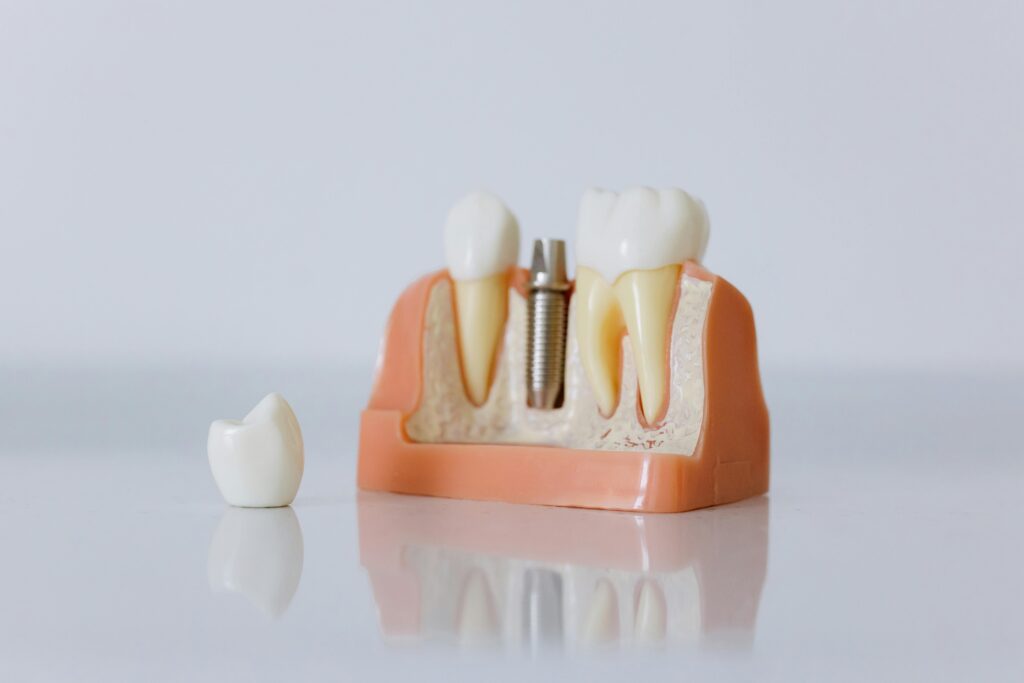
A Dental Implant is not just a false tooth. It is a small post, usually titanium and sometimes zirconia in specific cases, placed in the jawbone to act as an artificial tooth root. Once the implant integrates with the bone, it can support a crown, bridge, or denture. That root-level support is what makes the difference. It changes the conversation from simply filling a gap to rebuilding the tooth in a more complete and biologically sound way.
The real reason implants stand apart
When a natural tooth is lost, two things happen immediately. The visible gap affects appearance and function, and the hidden change begins inside the bone. Tooth roots stimulate the jaw every time a person bites and chews. Remove the root, and the bone in that area starts to shrink over time. This is one of the least understood consequences of tooth loss, yet it is central to why implants matter so much.
A bridge can replace the visible part of a missing tooth, but it does not replace the root. A removable denture can restore some appearance and basic chewing, but it rests on the gums and does not preserve bone the same way either. A Dental Implant, by contrast, sits within the jawbone and helps maintain that stimulation. It is the closest dentistry currently gets to replacing both the crown and the root of a natural tooth.
That distinction affects comfort, strength, longevity, and even facial structure. Patients who have worn dentures for years often notice changes in the lower third of the face as bone volume diminishes. The mouth can appear sunken, the denture fit worsens, and sore spots become more common. Implant-supported solutions interrupt that downward spiral.
Function matters more than people expect
People often seek treatment because they dislike the look of a missing tooth, especially in the front. Aesthetics are important, but daily function tends to become the bigger issue over time. The mouth is a system. When one tooth is missing, the surrounding teeth begin to absorb forces they were not designed to handle alone. Opposing teeth may over-erupt. The bite can drift. Small changes accumulate quietly.
A well-planned implant restores biting efficiency in a way that feels stable and predictable. Patients often describe the difference in simple, memorable terms. They stop chewing on one side. They stop cutting food into unusually small pieces. They stop worrying that something will move when they bite into an apple, a sandwich, or a steak. Those are not cosmetic victories. They are quality-of-life gains.
Strength is part of the story, but control is just as important. A removable appliance may technically replace several teeth, yet if it shifts under pressure or rubs the soft tissue, confidence drops. Implant-supported restorations tend to feel more secure because the support comes from the bone rather than from suction, adhesives, clasps, or pressure on the gums.
Preserving neighboring teeth is a major advantage
One of the strongest arguments for implants is what they do not require. A traditional fixed bridge often needs the healthy teeth on either side of the gap to be reduced so crowns can anchor the replacement tooth in between. That approach can work well in the right case, particularly if the adjacent teeth already need large restorations. But when those neighboring teeth are healthy and intact, preparing them carries a real biological cost.
Dentists who value conservative treatment think carefully about removing sound tooth structure. Once a healthy tooth is drilled down for a crown, it enters a different maintenance cycle for life. It may do well for many years, but it has still been altered permanently. An implant often allows a missing tooth to be replaced without touching the teeth next door. That independence is a major reason it is favored whenever anatomy, health, and budget permit.
This becomes even more important in younger adults. If someone loses a tooth in their thirties or forties, the treatment choice may need to serve them for decades. Preserving as much natural tooth structure as possible early on often pays off later.
Bone preservation is not a side benefit, it is central
Bone loss after extraction can be surprisingly fast in the first year and gradual thereafter. The amount varies with anatomy, gum health, trauma history, and whether grafting was done at the time of extraction, but the trend is predictable. Bone that is not being used tends to resorb.
This has consequences beyond appearance. As the ridge narrows or loses height, treatment becomes more complicated. Implant placement may later require bone grafting, sinus lifting in the upper jaw, or more advanced surgical planning. Replacing a tooth Dental Implants soon after loss, or at least preserving the site properly, can make a future implant simpler and more predictable.
That is one reason experienced clinicians sometimes talk to patients about timing with unusual urgency. Waiting is not always wrong, but it is rarely neutral. The mouth keeps changing. What looks like a straightforward missing tooth today may become a more involved rehabilitation a few years later.
Comfort and confidence are hard to quantify, but they matter
Many benefits of Dental Implants do not show up neatly on an x-ray. They show up in behavior. A patient smiles more freely in photos. Someone who stopped eating certain foods starts ordering them again. A person who used denture adhesive every morning no longer thinks about their teeth before leaving the house.
These details can sound minor until you hear them repeated over and over. Oral health lives in routines. If a treatment reduces daily friction, that matters. Fixed implant restorations tend to blend more naturally into ordinary life because they do not require removal, soaking, or the same degree of self-conscious management as removable alternatives.
There is also the question of speech. Missing front teeth, loose dentures, or unstable partials can affect sibilant and fricative sounds. Patients often compensate without realizing it, changing the way they position the tongue or lips. A stable implant-supported restoration can improve clarity simply by giving the mouth a reliable surface and contour to work against.
Why the long-term economics often favor implants
The up-front cost of an implant is one reason people hesitate. That hesitation is understandable. Implant therapy usually involves surgery, healing time, custom restorative work, and in some cases grafting or imaging that adds to the fee. A denture or bridge may cost less initially.
The more useful comparison is not just the first invoice, but the total treatment burden over time. Dentures often need relines, adjustments, repairs, and eventual replacement. Bridges can perform beautifully, but if one supporting tooth develops decay, fracture, or root canal complications, the entire bridge may need to be redone. The economics become more complex when maintenance, remakes, and biological costs are factored in.
None of this means implants are always cheaper over a lifetime. It does mean the value conversation should be broader than sticker price.
| Option | Up-front cost | Effect on nearby teeth | Bone preservation | Stability | | --- | --- | --- | --- | --- | | Single implant and crown | Higher | Usually preserves adjacent teeth | Best among common options | High | | Traditional bridge | Moderate | Requires preparation of adjacent teeth | Limited | High when well maintained | | Removable partial denture | Lower | May place stress on support teeth | Limited | Variable |
The table captures the broad pattern, but real treatment planning is more nuanced. A bridge may be the better choice if adjacent teeth already need crowns. A removable option may be the only practical step in the short term. Good dentistry is not about insisting on one solution for everyone. It is about matching the treatment to the biology, goals, and constraints of the person in the chair.
Success rates are strong, but planning is everything
Dental implants have a strong track record, especially when placed in healthy bone with careful case selection and good maintenance. Success rates commonly quoted in modern practice are high, often above 90 percent over many years, and in many straightforward cases even higher. The key word is straightforward. Results depend on anatomy, gum health, smoking, bite forces, diabetes control, oral hygiene, and whether the restoration is designed properly.
An implant can integrate perfectly and still run into problems if Dental Implants the crown is overloaded, if cleaning access is poor, or if the patient has untreated periodontal disease elsewhere in the mouth. This is where experience matters. The implant itself is only one part of the system. Surgical placement, prosthetic design, soft tissue management, and maintenance all influence the outcome.
One practical example appears in patients who clench or grind heavily. They can still be excellent implant candidates, but their restorations may need different materials, a night guard, and a design that accounts for greater force. Another example is the smoker with a thin upper jaw and a history of gum disease. Treatment may still be possible, but expectations must be realistic, and risk needs to be discussed plainly.
The process is more methodical than many people expect
The phrase “getting an implant” makes it sound like a single appointment. More often, it is a staged process. That is not a drawback. It is part of why outcomes are predictable.
A typical sequence may include:
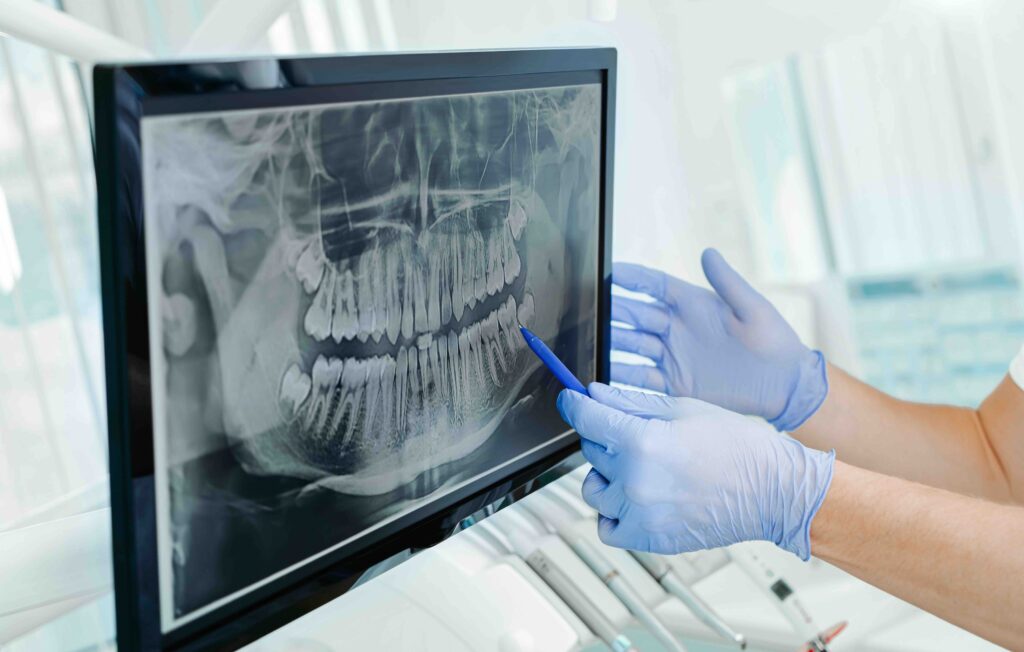
- Consultation, imaging, and treatment planning
- Extraction and site preservation if needed
- Implant placement, sometimes with grafting
- Healing and integration over several weeks or months
- Placement of the final crown, bridge, or denture attachment
The exact timing varies. Some patients receive immediate implants placed at the time of extraction. Others benefit from delayed placement after healing. The right approach depends on infection status, bone quality, soft tissue condition, smile line, and whether immediate esthetics are critical.
People are often surprised that the waiting phase is not just passive downtime. Bone is remodeling, soft tissue is maturing, and the body is doing the work that makes the final restoration durable. Rushing the process can compromise the result.
Not every patient is an ideal candidate, and that is worth saying clearly
Calling implants the gold standard does not mean they are the only standard. There are legitimate reasons not to proceed, at least not immediately. Severe uncontrolled gum disease, poorly controlled diabetes, certain medications, heavy smoking, active infection, and inadequate bone may all affect timing or feasibility. Cost is another reality, and it should not be minimized.
A thoughtful implant evaluation usually looks at several issues:
- gum health and history of periodontal disease
- bone volume and density at the site
- general medical conditions and medications
- smoking, grinding, and oral hygiene habits
- the patient’s priorities, timeline, and budget
None of these factors automatically rules treatment in or out. They guide the discussion. Sometimes the best care is to stabilize gum disease first. Sometimes a bone graft makes an implant possible later. Sometimes a bridge or partial denture is the wiser immediate step, with an implant kept in mind for the future.
This is one area where overselling does real harm. Patients deserve candor. If the anatomy is poor for an esthetic implant in the front without significant grafting, that should be said. If a patient is unlikely to maintain the restoration well, that should be said too. Gold standard does not mean easy standard.
Front teeth and back teeth are different challenges
Single implants in the back of the mouth are often more straightforward because the esthetic demands are lower, though chewing forces are higher. Front tooth implants, especially in the upper jaw, can be more demanding because a small mismatch in gum line, contour, or color becomes visible immediately. The artistry involved is significant.
This is one reason excellent implant dentistry is both surgical and restorative. Placing the implant in the bone is not enough. The three-dimensional position must support a crown that emerges naturally from the gum, matches the neighboring teeth, and allows hygienic cleaning. Millimeters matter. So does tissue thickness. So does the patient’s smile line. A person with a broad, high smile may reveal every detail of the gum architecture.
In experienced hands, the esthetic results can be exceptional. But this is also where unrealistic expectations can create disappointment. Patients sometimes assume an implant crown will be indistinguishable from the original tooth in every lighting condition and at every angle. Often that is achievable, sometimes it is not. Open, detailed planning improves satisfaction.
Full-arch treatment has changed lives for many denture wearers
The argument for implants becomes even stronger in people struggling with unstable dentures. Lower dentures, in particular, are notoriously difficult for some patients because the available surface area for suction is limited and the tongue constantly challenges stability. Even two well-placed implants can transform the experience by anchoring an overdenture.
For others, a fixed full-arch implant bridge offers a more dramatic change. Chewing efficiency improves, speech often becomes easier, and the daily anxiety about movement disappears. These cases are more complex and carry higher fees, but for the right patient the improvement can be profound. It is not unusual for long-time denture wearers to say they feel as though they have teeth again, rather than a device that substitutes for them.
That said, full-arch work is not maintenance-free. Patients still need regular recalls, professional cleaning, home care instruction, and occasional component replacement. One of the more persistent myths in dentistry is that implants cannot get into trouble because they are not natural teeth. They cannot decay, but the tissues around them can still become inflamed or infected if plaque control is poor.
Maintenance is simple, but not optional
A successful implant restoration should fit into normal oral hygiene habits without heroic effort. Daily brushing, flossing or interdental cleaning as appropriate, and routine professional visits remain essential. The exact method depends on the design. A single implant crown is maintained differently from an implant bridge or overdenture, but the principle is the same: clean the areas where biofilm collects, and do it consistently.
Peri-implant mucositis, which is inflammation around an implant without bone loss, can often be managed if caught early. Peri-implantitis, which involves inflammation with supporting bone loss, is more serious and more difficult to treat. The best prevention is careful planning from the start. Restorations should allow access for cleaning, contacts should be appropriate, and patients should know how to care for what they have.
One common issue is that people treat implant-supported teeth as indestructible because they feel secure. They are durable, not invincible. Ice chewing, unprotected nighttime grinding, and neglected maintenance can still lead to fractures, screw loosening, or tissue problems.
Why clinicians keep returning to implants despite the complexity
Dentistry has no shortage of acceptable ways to replace missing teeth. Bridges still have a place. Removable prosthetics still have a place. Yet when clinicians weigh the combination of function, bone preservation, comfort, and independence from neighboring teeth, implants repeatedly rise to the top.
That is the heart of the gold-standard argument. It is not based on novelty. Dental implants have decades of clinical history behind them. It is not based purely on esthetics, though they can look excellent. It is based on how comprehensively they solve the consequences of tooth loss.
A patient who chooses an implant is often not just filling a space. They are preserving anatomy, stabilizing the bite, protecting adjacent teeth, and investing in a replacement that behaves more like a natural tooth than any other common option. That does not make it the right answer every single time. It does explain why, in so many treatment rooms and over so many years, implants remain the benchmark against which other tooth replacement methods are measured.
Oaks Dental
5000 Parkway Calabasas Suite 308
Calabasas, CA 91302, United States
+1 818-431-2000
FAQ About Dental Implants
What is the downside of a dental implant?
Implants require surgery and a healing period that can last several months. Possible complications include infection, nerve or sinus injury, damage to nearby teeth and failure to bond with bone. Your dentist should assess your health, bone support and alternatives before recommending treatment.
What do dental implants typically cost?
There is no single price for every implant case. The number of teeth replaced, implant components, final restoration and any grafting or extractions affect the total. Request a written estimate covering every stage and confirm insurance benefits and out-of-pocket costs with the practice.
How long do tooth implants last?
An implant can provide long-term support and may last a lifetime with good oral hygiene and regular dental care, but this is not guaranteed. The crown or other restoration may need replacement sooner. Smoking, gum disease and some health conditions can reduce implant success.